Gut Microbiome Testing Your Health & Wellbeing is dependent on your microbiome
All of us are familiar with the term “Gut feeling,” which is a feeling based on an instinctive emotional response rather than a considered thought like “I had a gut feeling something was wrong but inexplicable”. It is scientifically proven that your “health and wellbeing” are also interlinked with your gut bacteria or microbiome in the gut.
What is Gut Microbiome? Gut microbiome or gut microbiota or gut flora, is the term used for microorganisms such as bacteria, archaea, fungi, and viruses that live in the digestive tracts of all living beings, especially humans. Human gut microbiome is unique like an individual’s thumb fingerprint or genetic DNA fingerprint and varies depending on geographical regions, gender, culture, demographics, genetics, diet, age and other environmental factors.
Some of the characteristic features of gut microbiome in humans can be understood by the following facts:
Human Microbiome
Estimated to contain 100 trillion microbes Perpetually present on and inside the body Together, they can weigh up to ~2 kgs of the body weight Gut Microbiome
Abundantly (>95%) resides in the gut or the GI tract Densest abundance on the large intestine Defined by 4 major groups of microorganisms - Bacteria, Archaea, Virus and Eukaryota [Fungi, Protozoa and Metazoa]
Bacteria is the most abundant group within the gut [>95%] >10,000 species have been identified to date that forms this microbiota. Each individual may have anywhere between 1000-2500 species at any given time. Linkage between Microbiome and Diseases: Research Studies Based
Most of the microbes are benevolent and in fact beneficial <5% of all microbes in the gut can cause disease but has been associated with > 90% of human diseases (directly or indirectly) Low or loss of microbial diversity is the most common reason for intestinal dysbiosis [disruption in the balance of microorganisms ] that causes a variety of diseases. How is microbial diagnosis/knowledge useful in health management?
Microbiome testing reveals the different levels of microorganisms present in the GI tract. More than 200 bacteria, viruses, and fungi exist in the human GI tract.
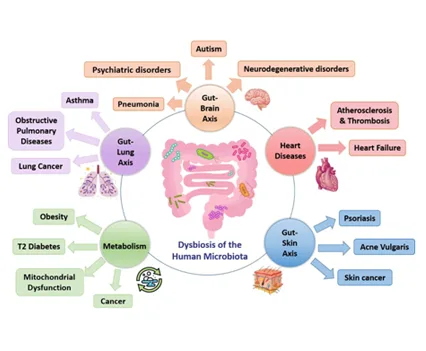
Research suggests that these microorganisms have a definitive role in chronic conditions such as:
Obesity & Weight Loss (Management) Sports Performance (Nutrient Absorption & Metabolism) Melanoma, Triple negative breast cancer, colorectal cancer, etc Mental Health (Depression, Anxiety, obsessive compulsive disorder, etc) Skin diseases like Psoriasis, Lupus, atopic dermatitis, etc Metabolic Disease (Diabetes Types 1 & 2, PCOD, hypertriglyceridemia, etc) Cardiac issues (hypertension, cardiovascular lifestyle diseases) Auto-immune Conditions (Rheumatoid Arthritis, Inflammatory Bowel Disease, Ulcerative Colitis, food allergy, Crohn’s disease, etc) Neurological diseases like Parkinson, Autism and other Global Development Disorders. Furthermore, Gut microbiome plays an important role in different parts of the body for:
Immunological - Immune system Gastrointestinal - Digestion Endocrine - Hormones Neurological - Cognitive function
Why Indians should be more concerned about their gut health? India is the global capital of lifestyle diseases
The term "lifestyle diseases" refers to health conditions that are largely caused by an unhealthy lifestyle. These diseases are commonly associated with unhealthy habits, such as a sedentary lifestyle, poor diet, smoking, and excessive alcohol consumption. Examples of lifestyle diseases include obesity, type 2 diabetes, heart disease, stroke, and certain types of cancer.
The incidence of lifestyle diseases has been increasing in recent years, with many experts attributing this trend to changes in lifestyle habits, as well as to the aging of the population. Lifestyle diseases are particularly prevalent in developed countries, where people have access to abundant food and lead sedentary lifestyles. However, these diseases are becoming increasingly common in developing countries as well, as people in these regions adopt more Westernized lifestyles.
Topping the lifestyle diseases list in India is diabetes , this disease is rising exponentially across the country, especially in urban areas. From a controlled 2% during the 70s, it went on to affect more than 15% in the year 2020. In metropolitan cities, the numbers are even more alarming, with 35 to 40% of the residents suffering from diabetes. Diabetes is not curable but stays lifelong, catering a huge market of pharma and multi-speciality hospitals.
Medicines do not work the same for all; some patients do not get any relief or may even get worse.
Few sustainable solutions : Over the past 10 years, microbiome research has yielded tremendous insights into the composition of the gut microbiome and has identified possible associations between the gut microbiome and several nutrition - and/or lifestyle-related diseases. A growing body of evidence suggests that the intestinal microbiome modulates the risk of several chronic diseases, including type 1 & 2 diabetes, allergy, cardiovascular disease, systemic low-grade inflammation, inflammatory bowel disease, and colorectal cancer. Dietary habits and nutrient composition influence the chronic disease risk even in autoimmune, neural diseases and modulate the composition and function of the gut microbiome.
Common symptoms of an unhealthy gut microbiome Several symptoms are indicative of poor gut microbiota and overall digestive performance. Unhealthy lifestyle and dietary patterns can adversely impact the human microbiome. It is important to perform comprehensive testing of gut microbiota regularly as a part of a systematic review and meta-analysis of key indicators and risk factors for disease. It would be best to track the following symptoms as they indicate issues in the microbiota.
Chronic stomach discomfort - The human body's microbiome can immediately share signs of digestive issues through chronic discomfort. This is an initial symptom in patients with diseases related to poor digestive health.Consistent feeling of fatigue - Regardless of how much sleep you're getting and how nutritious your meals are, if you are chronically tired, you may need a gut microbiome test. An imbalance of the microbiome can immediately decrease metabolic performance in the body.Skin irritations and inflammation - A secondary stage symptom such as skin irritation in some parts of the person's body can be a warning sign of gut microbiome issues.Autoimmune issues - Developing food intolerances, autoimmune conditions, andChronic inflammation is an essential warning indication that there is an imbalance in the presence of beneficial bacteria in the body.Microbiome Modulation Microbiome modulation is the term used for preventing, controlling and maintaining good gut health for one’s own wellbeing. Microbiome modulation can provide significant benefits to patients in several ways:
Gut Health Optimization : Modulating the microbiome can help restore balance in the gut, promoting healthy digestion, nutrient absorption, and reducing digestive issues such as bloating, constipation, or diarrhoea.Your microbiome constantly sends messages throughout your body, which can be heavily influenced by your diet and lifestyle. We translate these inner signals, unique in every microbiome, into Health Scores and actionable recommendations that are relevant and personalized to you.
Immune System Enhancement : The microbiome plays a crucial role in supporting the immune system. Modulation can strengthen the immune response, improving resilience against infections, allergies, and autoimmune conditions.Mental Well-being : The gut-brain connection is well-established, and microbiome modulation can positively impact mental health. By nurturing a diverse and balanced microbiome, patients may experience reduced symptoms of anxiety, depression, and stress, and enjoy improved cognitive function.Weight Management : Imbalances in the microbiome can contribute to weight gain and metabolic issues. Modulation techniques, such as personalized dietary interventions or probiotic supplementation, can support healthy weight management and metabolic regulation.Disease Prevention and Management : Modulating the microbiome has shown potential in preventing and managing various diseases, including inflammatory bowel disease (IBD), irritable bowel syndrome (IBS), cardiovascular disease, diabetes, and even certain types of cancer.Enhanced Nutritional Support : A well-balanced microbiome can improve the breakdown and absorption of nutrients from the diet. Modulation techniques can optimize nutrient utilization; ensuring patients receive maximum benefit from their dietary choices.Remember, microbiome modulation needs to be approached in a personalized manner, considering an individual's unique microbiome composition and health goals. We provide tailored recommendations for optimal outcomes since you need not abandon a whole class of foods that don’t suit you but it might be only a single ingredient avoiding which might fix the problem dramatically.
In order to personalize your recommendations (precision medicine), every journey begins with a test and thorough evaluation. Whether you're focused on improving your gut microbiome health, oral microbiome health, cellular function, or all of these.
The functional medicine model of care offers a patient-centred approach to chronic disease management. It seeks to answer the question, “Why are you ill?” so you can receive personalized, precise and effective care for your needs. Functional medicine providers spend time listening to you and gathering your medical history to provide a personalized treatment best for you with least side effects.
About Gut Microbiome Testing Microbiome tests measure the microorganisms in a person’s gastrointestinal (GI) tract. These tests can give the person an idea of the types and amounts of microorganisms in their gut.
A microbiome test examines the gut flora in a sample of an individual’s stool.
People may take a microbiome test to identify the different kinds of bacteria in their GI tract. Based on the presence of the gut flora, doctors can identify if the gut is functioning optimally, or not. However, these tests are not meant for routine diagnosis and can help only when person has any concerns over the health of their GI tract. One can contact a doctor or a functional nutritionalist for advice and Genome Foundation has seasoned clinicians and scientists on call for consultancy, counselling and advisory services on gut microbiome testing and treatment options. Genome Foundation can help treating diseases with the latest approach of using Genetics, Lifestyle, Metabolite and Microbiome guided Next Generation Therapy
Genome Foundation can help/diagnose in rebuilding the gut microbiome There are several strategies that individuals can opt for to improve good bacterial growth in the stomach. Gut issues should be identified early on, and a clear strategy should be driven to improve the quality of gut microbiota in the body. In fact, research from Antonella Gagliardi et al suggests that introducing probiotics can help improve the gut microbiome.
It is important to consult the doctor about the best ways to improve gut microbiome health, especially if there are chronic symptoms lasting several weeks. The following strategies can help improve the gut microbiota in the body:
Consuming prebiotic fibre. Focusing on the right combination of probiotics. Reducing stress in everyday life. Improving sleep quality and exercise levels. Enhancing the quality of diet, focusing on micro and macronutrients. Taking the right medication to resolve microbiome issues. What can be expected once the gut is healed?
Once the gut flora is improved, the following advantages will be visible in the individual:
Increased cognitive function Reduced inflammation and gastric issues Higher energy and lesser mood swings Lower risk of diseases